
 Coffees.
  Boxes.
  Slow Coffee.
  Teas and chocolates.
  Machines.
 B Corp.
  Vision.
  TF.
TF. 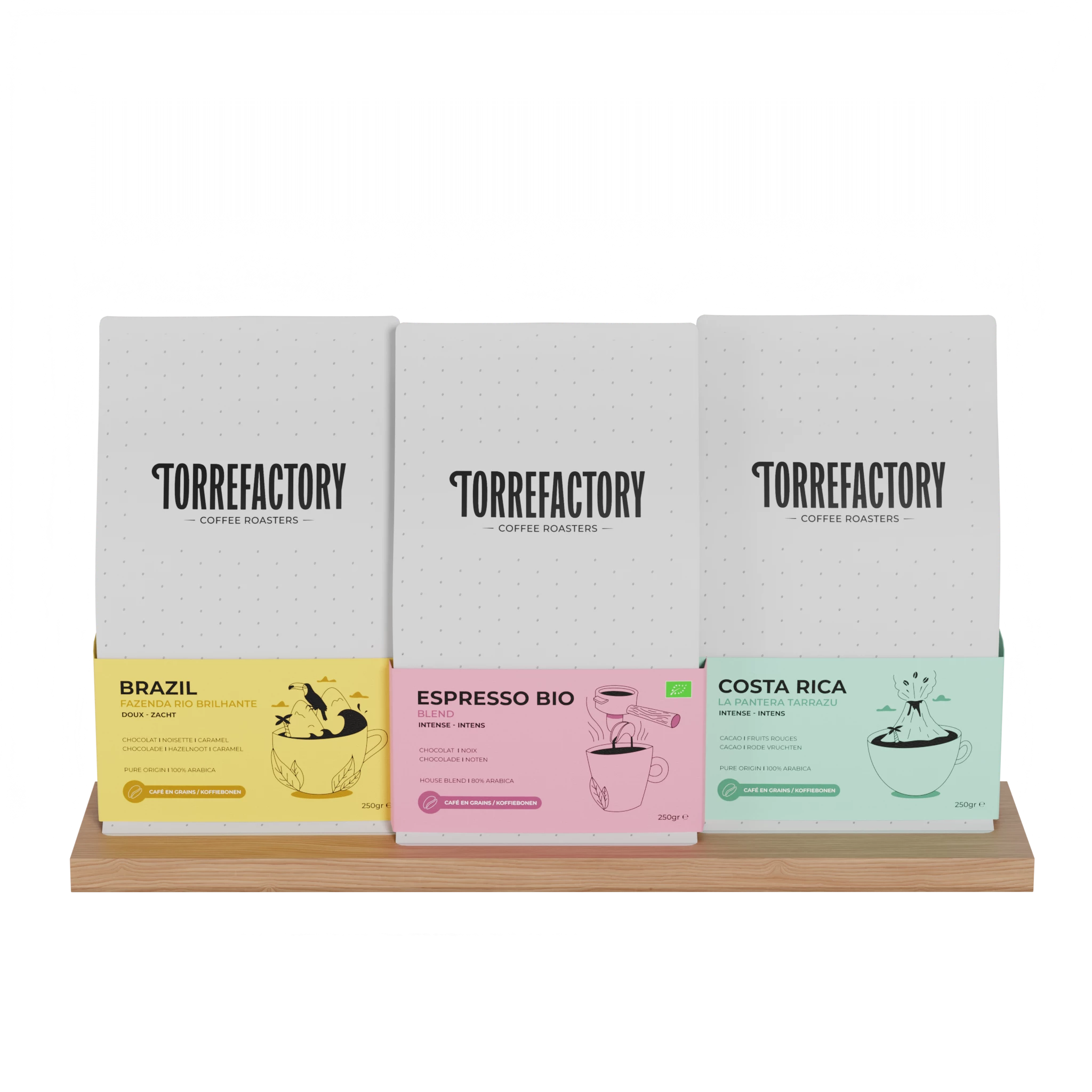 Points of sale.


Organic roaster
Organic roasters: how to recognize a true artisan committed to respecting coffee and the planet?
More and more consumers want to combine the pleasure of coffee with responsible consumption. With this in mind, choosing a organic roaster becomes essential. But how do you recognize a truly committed professional, beyond mere labels? Here are the keys to finding your way around.

What is an organic roaster?
Being a organic coffee roaster means more than just putting a label on a packet. It's a precise commitment, validated by independent certification, which guarantees that the coffees selected are grown without synthetic pesticides or chemical fertilizers, according to sustainable agricultural practices.
But for many committed roasters, it doesn't stop there. Beyond the label, they ensure the overall coherence of their approach: mastery of roasting, respect for the specific characteristics of each origin and, sometimes, the choice of more transparent and responsible supply chains.
Finally, transparency is often an integral part of the approach: indication of origin, preparation advice, clear information on storage. The result? A purer, more balanced coffee, closer to the best that nature has to offer.
Criteria for a good organic roaster
- slow, precise, artisanal roasting, designed to reveal the specific aromas of each origin;
- full traceability of coffees, with clear information on region, altitude and variety;
- preparation tips adapted to different extraction methods;
- attention to freshness and storage conditions;
- and always, ethical sourcing, via cooperatives or short circuits, to guarantee fairer remuneration for producers.
The result? A consistent, transparent organic coffee bean that respects the environment without neglecting taste... or meaning.
Remember: a good organic roaster isn't just a label, it's a complete process, from field to cup.
Torrefactory: craftsmanship, ethics and taste at the heart of your mug
Certified organic roaster in Belgium, Torrefactory offers a committed, artisanal and fair-trade range. Tailor-made roasting, short circuits, recyclable packaging, support for the Efico Foundation: here, every coffee has meaning. And above all, taste.
Choosing a high-quality organic roasted coffee
Carefully selected origins, artisanal roasting, and responsible supply chains: discover organic coffees that respect the bean, the producers, and your cup.
FAQ - In the workshop of a committed organic coffee roaster
Is an organic coffee roaster necessarily an artisan?
No. An organic roaster can work with certified organic coffees while operating on a large scale, with high volumes and standardized roasting profiles. Craftsmanship does not depend on the organic label but on the way the coffee is processed. An artisanal organic roaster is distinguished by controlled batch sizes, roasting adapted to each origin, and transparency in their choices. They consider coffee to be a living product, not a uniform material.
What is the difference between an organic coffee roaster and a simple seller of organic coffee?
An organic coffee seller distributes a certified product without interfering with its processing. An organic roaster, on the other hand, selects green coffees, defines roasting profiles, and takes responsibility for the result in the cup. They work with the raw material to bring out the aromas, not just to comply with specifications. This complete control ensures consistency between origin, roasting, and tasting, which profoundly changes the consumer experience.
Why is roasting essential in an organic approach?
Organic coffee only makes sense if it is properly roasted. Roasting too quickly or too intensely masks the natural aromas and makes the taste uniform, even with excellent beans. The role of the organic roaster is to respect the balance of the coffee, develop the sugars, and limit excessive bitterness. Organic farming guarantees a healthy agricultural base, but only controlled roasting can reveal the coffee's true aromatic potential in the cup.
How can you verify the credibility of an organic coffee roaster?
The credibility of an organic coffee roaster can be verified by concrete evidence. Official certification is a starting point, but it is not enough. It is also important to look at the clarity of information on the origin of the coffee, the roasting date, traceability, and the ability to explain roasting choices. A committed professional documents their work, stands by their choices, and avoids vague or purely marketing-oriented discourse.
Is organic coffee from a roaster necessarily fair trade?
No. The organic label only concerns agricultural practices, not producers' remuneration. An organic roaster may work within the conventional economic system. Those who are truly committed often incorporate a fair trade dimension, through cooperatives, direct partnerships, or support foundations. This consistency ensures that the quality of organic coffee is not compromised by economic pressure on producers.
Why choose an organic coffee roaster rather than organic coffee from a supermarket?
Choosing an organic roaster gives you access to fresher, more traceable, and truly crafted coffee. Unlike organic coffees sold in supermarkets, which are often roasted a long time ago and standardized, coffee from an organic roaster is designed to reveal its origin and adapt to different preparation methods. The support, transparency of the process, and quality in the cup offer a more consistent experience that is more faithful to the original product.
Find out more about our products and services:
coffee beans - roasted coffee - specialty coffee - fair trade coffee - roaster coffee - subscription for coffee beans - buying coffee beans - coffee tasting box - coffee bean machine - automatic coffee machines - organic coffee beans - best coffee beans