
 Coffees.
  Boxes.
  Slow Coffee.
  Teas and chocolates.
  Machines.
 B Corp.
  Vision.
  TF.
TF. 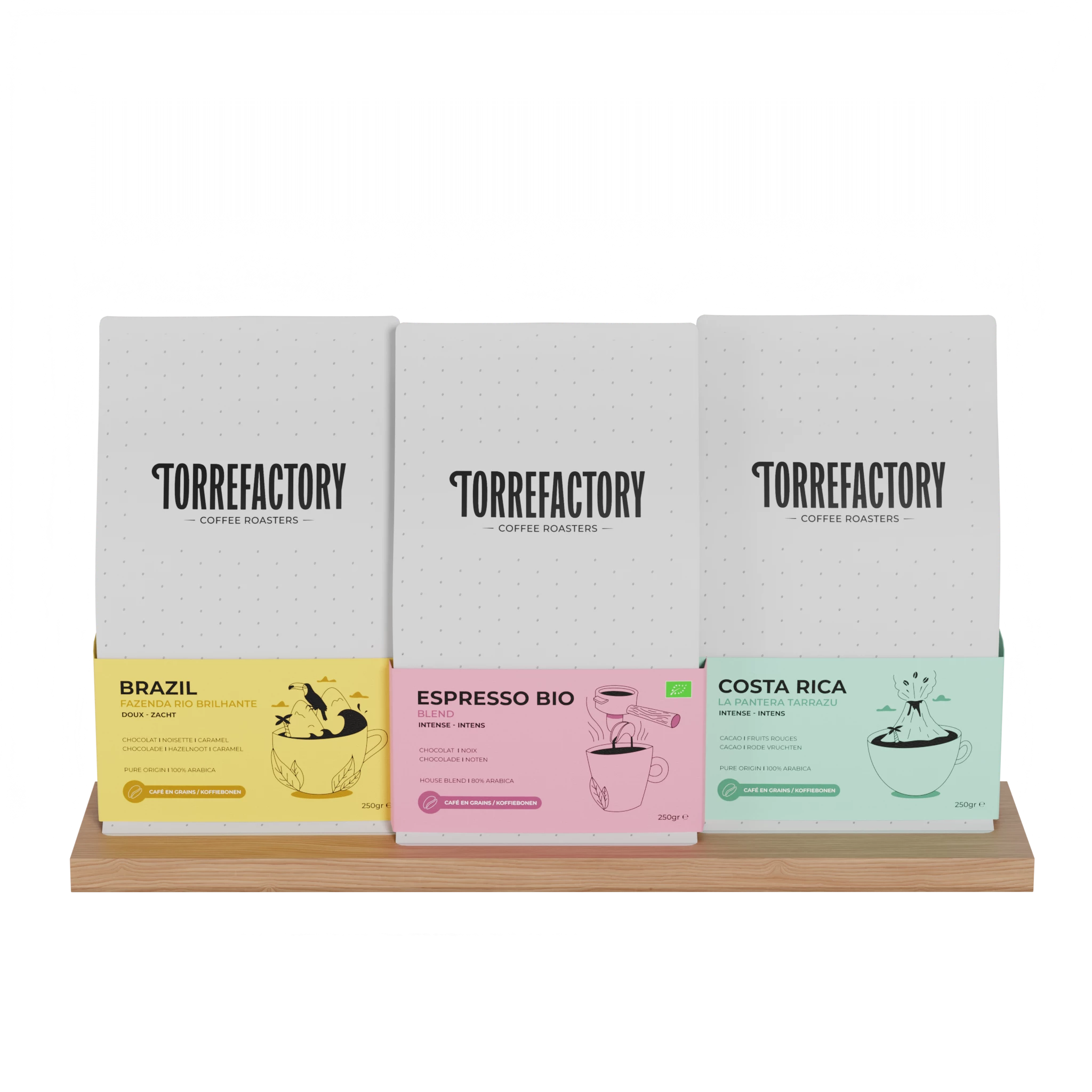 Points of sale.


Roasted coffee
A beverage that doesn't lose its way: roasted coffee spotlights
The International Coffee Organization has noted an increase in robusta coffee exports in recent years. While in 2021, the proportion between Arabica and Robusta exports was largely in favor of Arabica, with a 65% vs. 35% pattern, in 2022 the proportion of Arabica will be only 60%, compared with 40% for Robusta. These figures reflect a curiosity about robusta coffee, with its pronounced, very bitter body, which is more resistant and therefore easier to produce.
At Torrefactory, we use almost exclusively Arabica, except where our taste buds take us to explore spicier recipes. Our Italian blend also contains roasted Robusta coffee.

What color should artisan coffee beans be?
This depends on the profile the master roaster wishes to give them in the mouth. Depending on the terroir and the specificity of each bag of beans, the artisan decides to roast the green coffee more or less. Gentle roasting preserves the coffee's acidic notes and lightness, while more insistent roasting will spice up the taste and trigger sweet reactions that are not to our displeasure.
The light color of your roasted coffee promises floral accents and a hint of acidity in the fruity aromas. A dark-roasted coffee reveals all its power. A guaranteed wake-up call! In between, there's a richly flavored, balanced coffee.
How to prepare roasted coffee
Here again, it all depends on the terroir. A coffee roasted for its intensity makes a very good espresso, which you can filter with a traditional coffee machine, with very good results. A coffee with gourmet hints of cocoa or nuts reveals itself extraordinarily well through a French press. Finally, spicy and floral coffees can be enjoyed almost like teas, with Aeropress or Chemex percolation.
Remember, there are as many ways to extract coffee as there are flavors. Let your nose and taste buds guide you in the best way to prepare each bag of roasted coffee.
Limited edition coffees
Do you have something to celebrate? A wedding anniversary, a diploma or a driver's license? Any occasion is a good reason to give a limited edition of roasted coffee as a gift. From time to time, Torrefactory launches an innovative blend for a short time only. Does the exclusivity of these opportunities make your mouth water? Stay tuned to be among the first to know.
Ps. It's not forbidden to treat yourself to these occasional pleasures. Need an excuse? Think of them as a reward for your diligence and support for an artisan-roasted coffee.
Keep up to date with our roasted coffees
At a time when consumers are keen to see more craftsmanship in their cups and plates (with 443 artisans and craft businesses certified by the FPS Economy by 2022), we too are promoting our Certified Artisan label.
This certification represents a passionate effort to achieve a roasted coffee with an unrivalled taste. You'll find this authenticity every day in your cup of coffee, keeping up with the latest ethical trends.
This is demonstrated by the "Swiss Water Process", a natural decaffeination process, and our blog posts on our direct partnerships, where you can discover the travel log corresponding to your preferred Torrefactory coffee.
Enjoy a carefully roasted coffee
Browse our range of coffee beans and discover the result of artisanal roasting designed to reveal each origin.
FAQ - Understanding roasted coffee
What exactly is roasted coffee?
Roasted coffee is green coffee that has been heated gradually and carefully to develop its aromas, texture, and color. Roasting causes complex chemical reactions, including the caramelization of sugars and the development of aromatic compounds. Without this step, coffee would taste bland and uninteresting. Depending on the roasting profile chosen, roasted coffee can reveal floral, fruity, chocolate, or nutty notes, while retaining the identity of its origin.
What is the difference between Arabica coffee and Robusta coffee?
The difference between Arabica and Robusta roasted coffee lies mainly in their aromatic profile, mouthfeel, and caffeine content. Arabica generally offers a more complex palette, with greater sweetness, controlled acidity, and finesse. Robusta, which is more robust to grow, develops a more powerful body and a more pronounced bitterness. When properly roasted, these two coffees can be used alone or together to create a balanced and consistent roasted coffee blend.
Does the degree of coffee roasting really influence the taste?
Yes, the intensity of a coffee's roast is directly linked to its flavor profile. A light roast brings out the natural acidity and floral or fruity notes. A darker roast develops more intense aromas, often chocolatey, caramelized, or spicy, with a more pronounced bitterness. In between, a medium roast produces a balanced coffee, where sweetness, intensity, and aromatic complexity are harmoniously expressed depending on the preparation method.
How to choose a roasted coffee according to its preparation method?
Choosing a roasted coffee that is suited to your brewing method allows its aromas to fully express themselves. A more intensely roasted coffee is ideal for espresso, where the pressure accentuates the body and strength. Gentle methods such as filter coffee, Chemex, or French press bring out lighter, floral, or spicy profiles. Adapting the roast to the extraction method respects the bean and its terroir, resulting in a balanced cup that is faithful to the roaster's intention.
Why are some roasted coffees offered in limited editions?
Limited edition roasted coffees showcase a specific origin, harvest, or experimental blend. These short runs give roasters the freedom to offer unique flavor profiles that are only available for a limited time. For coffee lovers, this is an opportunity to discover new flavors, often linked to a specific harvest. These coffees are not intended to be permanent, but rather to explore and renew the taste experience.
What distinguishes artisan-roasted coffee from industrial coffee?
Artisanal roasted coffee is distinguished by a tailor-made approach, where each origin benefits from a customized roasting profile. Quantities are deliberately limited in order to precisely control the roasting process and preserve the aromas. Conversely, industrial roasting favors speed and uniformity, often at the expense of aromatic complexity. Artisanal roasted coffee emphasizes traceability, respect for the bean, and expression of the terroir, for a more authentic experience in the cup.
Our additional information on roasted coffee :
- Direct support for small producers with bean-roasted coffee from Torrefactory
- Enjoy your strategically roasted coffee beans
- The different types of roasted coffee by origin