
 Coffees.
  Boxes.
  Slow Coffee.
  Teas and chocolates.
  Machines.
 B Corp.
  Vision.
  TF.
TF. 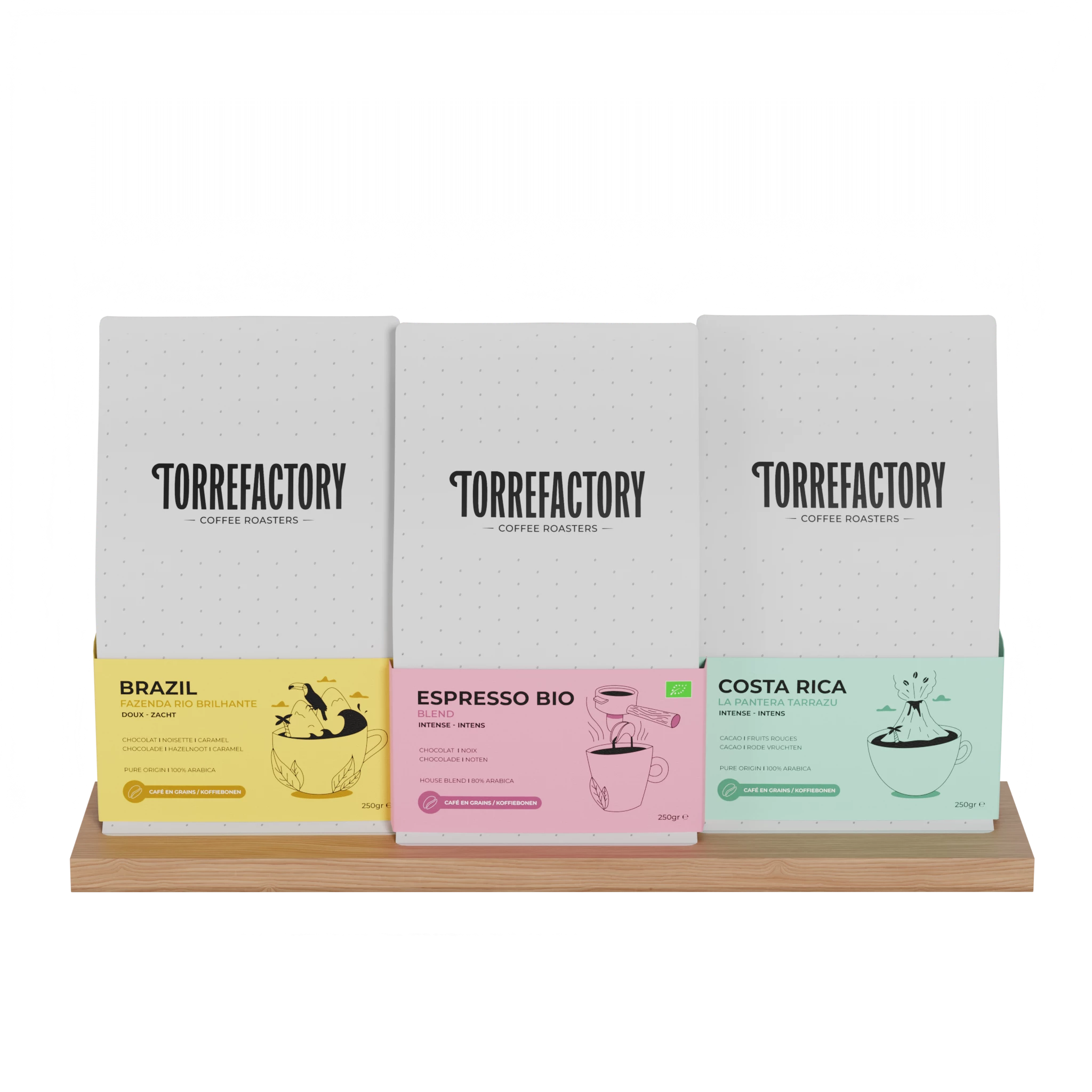 Points of sale.


Coffee roasting
Coffee roasting: a unique experience that sublimates every bean
The result of meticulous, passionate work, roasted coffee reflects a history, a terroir and, above all, the know-how of artisan roasters who, through each batch, strive to reveal the aromas hidden in each bean. Unlike industrial coffees, roasted coffee stands out for its exceptional quality and the direct link forged between producer and consumer. This model, which favours respect for raw materials and sustainable production methods, is gaining in popularity around the world, particularly among lovers of quality coffee.
The unique roasting process
Hand-roasted coffee is the fruit of a delicate process, in which each stage is carefully controlled to guarantee optimum results. The roaster, a master of this art, oversees every detail: from the selection of beans to the constant monitoring of temperatures and cooking times. Unlike industrial methods, where beans are often roasted en masse, artisanal roasted coffee is prepared in small batches. This ensures optimum quality control and customization for every type of coffee.
At Torrefactory, this artisanal approach is at the heart of our approach. By roasting 15 kg batches of green beans, we ensure complete control over production, guaranteeing a unique coffee for every preparation. This tailor-made process enables us to adapt the roasting process to the coffee variety used, so as to sublimate the aromas specific to each origin, whether it's a coffee with fruity notes from Ethiopia or a more full-bodied coffee from Brazil.

A lively café linked to its origins
Artisan-roasted coffee is as much a question of technique as it is a reflection of the natural and social conditions under which it is produced. Indeed, coffee quality is influenced by factors as diverse as climate, growing methods and even geopolitical fluctuations that can impact bean supply. This makes roasted coffee a living product, evolving with the seasons and local realities.
At Torrefactory, this awareness of coffee origins is reinforced by a commitment to direct trade. This model enables roasters to work directly with small producers, without intermediaries. Not only does this approach ensure better remuneration for farmers, it also helps maintain consistent coffee quality while respecting sustainable farming practices. The relationships of trust that develop between roasters and producers guarantee complete traceability and transparency, from field to cup.
A commitment to the future
As players in the coffee-roasting industry, artisans like those at Torrefactory are fully aware of the challenges they face for the future. They have to meet the growing demand for quality coffees, while preserving the values that make their profession unique: respect for producers, artisanal quality and a direct relationship with consumers. Their vision is based on reasoned, sustainable production, in which each batch of coffee is treated with the care necessary to reveal its best aromas.
This approach is not simply a business strategy, but a genuine commitment to the environment and local communities. By working with producers who adopt cultivation methods that respect biodiversity and natural resources, roasters ensure that their roasted coffee contributes to the preservation of ecosystems, while guaranteeing an exceptional product.
Roasting coffee: a sensory and ethical journey
For coffee lovers, choosing an artisan-roasted coffee goes beyond a simple taste decision. It's an opportunity to travel through coffee-growing regions, to discover new aromas and to support ethical and sustainable practices. Each cup of coffee becomes a unique experience, where the quality of the product reflects a commitment to fairer trade. In this way, artisan roasted coffee embodies a vision of coffee in which every stage, from cultivation to roasting, is designed to offer an incomparable tasting experience. More than just a beverage, roasted coffee is a living product, deeply rooted in the terroirs where it is grown and enhanced by the know-how of artisan roasters. By choosing this type of coffee, consumers participate in an ethical approach that respects mankind and the planet, while enjoying a product of exceptional quality.
Choosing your roasted coffee
Still hesitating? Let yourself be tempted by the diversity of origins of our roasted coffees.
FAQ - Understanding what makes a roasted coffee unique
What is meant by roasted coffee?
Roasted coffee refers to coffee that has been processed by hand in small quantities in order to reveal the unique aromatic potential of each bean. Unlike standardized industrial coffees, roasted coffee is based on a roasting process that is adjusted according to the origin, variety, and harvest. The roaster precisely adapts the roasting profile to preserve the balance between acidity, sweetness, and body. The result is a coffee that is distinctive, expressive, and true to its terroir.
Why is roasted coffee considered a living product?
Roasted coffee is considered a living product because it evolves according to harvests, climatic conditions, and the natural characteristics of green coffee. From one year to the next, the same coffee can exhibit slight aromatic variations. The roaster's role is therefore to adjust the roasting process to maintain consistency in taste. This ability to adapt makes roasted coffee a dynamic product, influenced by time, seasonality, and living organisms.
How does artisanal roasting change the taste of coffee?
Artisanal roasting allows for precise control of heat and time, which directly influences the taste of the roasted coffee. Unlike rapid industrial processes, it promotes the gradual development of aromas without burning the beans. Fruity, floral, and rich notes are more pronounced, while excessive bitterness is avoided. This approach results in a more balanced, nuanced cup that respects the natural characteristics of the coffee.
Why are roasted coffees often produced in small batches?
Producing coffee in small batches allows us to tailor the roasting process precisely to each origin and each harvest. This method offers greater control over the roasting process and limits variations between beans. At Torrefactory, working in small batches facilitates quick adjustments and guarantees consistent quality. This artisanal approach prioritizes precision and respect for the product, rather than standardization dictated by volume.
Is roasted coffee linked to direct trade with producers?
Roasted coffee is often associated with more direct relationships with producers or their cooperatives. This proximity promotes a better understanding of growing conditions, enhanced traceability, and fairer remuneration. Direct trade also ensures more consistent quality and encourages sustainable agricultural practices. For consumers, this translates into roasted coffee that is more transparent, consistent, and imbued with human values.
Why choose a roasted coffee rather than an industrial coffee?
Choosing a roasted coffee means choosing a coffee that has been processed with precision, freshness, and respect for the bean. Where industrial coffee seeks consistency on a large scale, roasted coffee values diversity of origin and artisanal expertise. It offers a richer, more distinct, and more authentic taste experience. This choice also supports a more responsible industry that is attentive to quality and to the women and men who work in it.
Find out more about our products and services:
coffee beans - roasted coffee - specialty coffee - fair trade coffee - roaster coffee - subscription for coffee beans - buy coffee beans - coffee tasting box - coffee bean machine - automatic coffee machines - organic coffee beans - best coffee beans