
 Coffees.
  Boxes.
  Slow Coffee.
  Teas and chocolates.
  Machines.
 B Corp.
  Vision.
  TF.
TF. 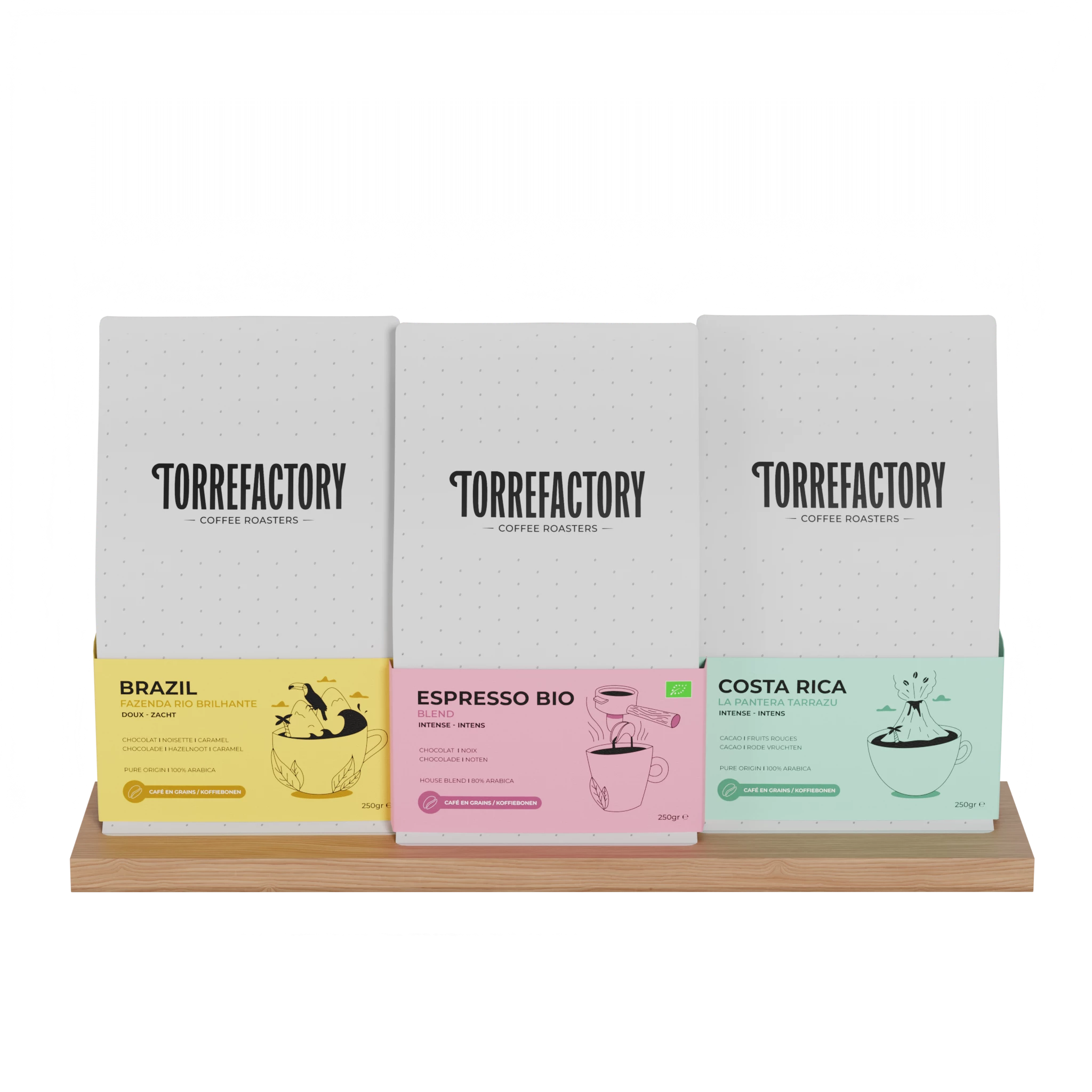 Points of sale.


Professional coffee roaster
Professional coffee roaster: between tradition and new technologies
The profession of professional coffee roaster has evolved considerably over the years, while retaining its artisanal essence. Once guided solely by experience, the senses and an in-depth knowledge of coffee, this craft now benefits from technological advances to offer unrivalled precision. Modern master roasters combine the best of both worlds: the traditional art of roasting and the efficiency of cutting-edge technologies to create exceptional coffees.

The changing face of professional coffee roasting
At the heart of artisanal coffee roasting has always been exceptional know-how, handed down from generation to generation. Professional coffee roasters must master every stage of the process, from bean selection to temperature management, to reveal the subtlest aromas and deliver a cup of coffee full of character. However, with the emergence of new technologies, the profession has undergone a radical transformation.
One of the major advances is computer-assisted roasting. While the professional coffee roaster still relies on his or her keen senses to adjust the nuances of roasting, computerized systems now enable him or her to control the temperature curve with extreme precision. This process, often represented by an "S"-shaped curve, ensures total control of every stage of the roasting process, guaranteeing consistent coffee quality.
Thanks to sophisticated software, every phase of the roasting process, from the "first crack" to the end, can be monitored and adjusted to the nearest thousandth of a second. This precision makes it possible to optimize flavor development and adapt roasting to the unique characteristics of each coffee origin. Despite the introduction of these advanced technologies, the roaster's five senses remain at the heart of the process. Sight, hearing and above all smell continue to play a crucial role in determining the exact moment when beans reach full aromatic maturity.
Craftsmanship in the 21st century: tradition and innovation
Although the roasting profession has evolved, it remains deeply rooted in craftsmanship. Computer assistance is not there to replace human expertise, but to optimize it. Technology enables professional coffee roasters to achieve impeccable consistency and quality, even when handling large volumes. It also enables them to play with different roasting profiles, testing new temperature curves to explore unexpected aromas and sublimate each bean.
In addition to roasting technologies, modern roasters also have access to a range of tools for analyzing coffee characteristics, from density to moisture content, which greatly influence the roasting process. This data enables roasters to tailor the roasting process to each batch of beans, guaranteeing consistency between different productions while offering the flexibility to adjust aromatic nuances.
The professional coffee roaster in the digital age
The role of a professional coffee roaster is no longer limited to mastering the roasting process. In a connected world, coffee roasters are getting closer and closer to their audience via social networks and online platforms. Roaster coffee, once seen as a niche reserved for the elite, is becoming accessible to a wider audience thanks to tips, explainer videos and offers shared on platforms like Facebook, Instagram and LinkedIn.
These digital channels enable roasters to communicate directly with consumers, share their passion and explain the subtleties of their craft. They can also explain how modern technologies complement their artisanal work. The professional coffee roaster, far from remaining stuck in the past, embraces the digital age to offer an unrivalled coffee experience.
The qualities of a good professional coffee roaster
Technology may have revolutionized coffee roasting, but it doesn't replace the know-how and human qualities that make a roaster a true craftsman. A good professional coffee roaster must above all :
- A sharp palate: Recognize the complex aromas and flavors that develop at each stage of the roasting process.
- Be rigorous: Precise monitoring of roasting temperatures and times is essential for consistent quality.
- Adaptability: Every batch of coffee is unique. A roaster must be able to modify his or her approach according to the specific characteristics of the beans.
- Passion: Passion for coffee and commitment to offering an exceptional product are at the heart of our business.
- Mastering technology: Knowing how to use modern tools to optimize your work while maintaining manual control of critical processes.
Balancing tradition and innovation
Professional coffee roasters strike a perfect balance between tradition and modernity. While new technologies offer unprecedented possibilities in terms of precision and quality, they have not replaced human know-how. On the contrary, they enable roasters to sublimate each bean and guarantee their customers an exceptional coffee experience, while preserving the authenticity of a craft rooted in artisanal tradition. Today's coffee roaster is both a master of fire and a digital expert, evolving his art to meet the growing demands of coffee lovers the world over.
Taste the work of a coffee roaster
Each roasting profile is designed to reveal the coffee's aromatic identity. Browse our selection of precisely roasted coffee beans.
FAQ - The profession of professional coffee roaster: a combination of skill and precision
What defines a professional coffee roaster?
A professional coffee roaster is defined by their ability to work with regular volumes while ensuring consistent, controlled quality. They have advanced technical expertise, precise control tools, and in-depth knowledge of raw materials. Their role is not limited to roasting coffee; it also involves analyzing, developing, and enhancing the aromatic profiles specific to each origin. Through roasting, they adjust the parameters to reveal the balance, complexity, and identity of the coffee, while ensuring the reproducibility of the aromatic profiles over time.
How does technology help professional coffee roasters?
Technology allows professional coffee roasters to accurately monitor each stage of the roasting process. Control software records temperature curves, cooking time, and cooling, facilitating analysis and repeatability. These tools improve consistency between batches and ensure production. However, technology remains a support: it does not replace the sensory experience or the interpretation skills of professional coffee roasters.
Does the professional roaster work differently depending on the origin of the coffee?
Yes, professional coffee roasters systematically adapt their approach according to the origin of the coffee. The density of the bean, its moisture content, altitude, and variety directly influence its reaction to heat. A washed coffee requires a different roasting profile to a natural coffee. This ability to adapt allows the identity of the terroir to be respected and the aromas specific to each origin to be revealed, without seeking to standardize the flavors.
What role do the senses play in an increasingly technological profession?
Despite advances in digital tools, the senses remain central to the profession of professional coffee roaster. The sense of smell identifies the key stages of aromatic development, hearing provides information on the internal reactions of the bean, and sight confirms the evolution of color. These sensory signals complement the technical data. The machine measures, but the roaster interprets, adjusts, and validates the final decisions in real time.
Why is consistency so important for a professional coffee roaster?
Consistency is essential to guarantee a reliable and recognizable experience. Professional coffee roasters must be able to reproduce the same flavor profile across different batches and over time. This consistency is essential for loyal customers and catering professionals alike. It relies on rigorous monitoring of parameters, good management of raw materials, and expertise gained through experience in the field.
Is a professional coffee roaster also a player in the coffee industry?
Professional coffee roasters often play a key role in the coffee industry. They select their green coffees, develop lasting relationships with producers, and prioritize responsible supply chains. Their role goes beyond processing beans: they help promote local terroirs, pass on knowledge, and raise consumer awareness. This comprehensive vision is now an integral part of the professional roaster's job.
Find out more about our products and services:
coffee beans - roasted coffee - specialty coffee - fair trade coffee - roaster coffee - subscription for coffee beans - buy coffee beans - coffee tasting box - coffee bean machine - automatic coffee machines - organic coffee beans - best coffee beans