
 Coffees.
  Boxes.
  Slow Coffee.
  Teas and chocolates.
  Machines.
 B Corp.
  Vision.
  TF.
TF. 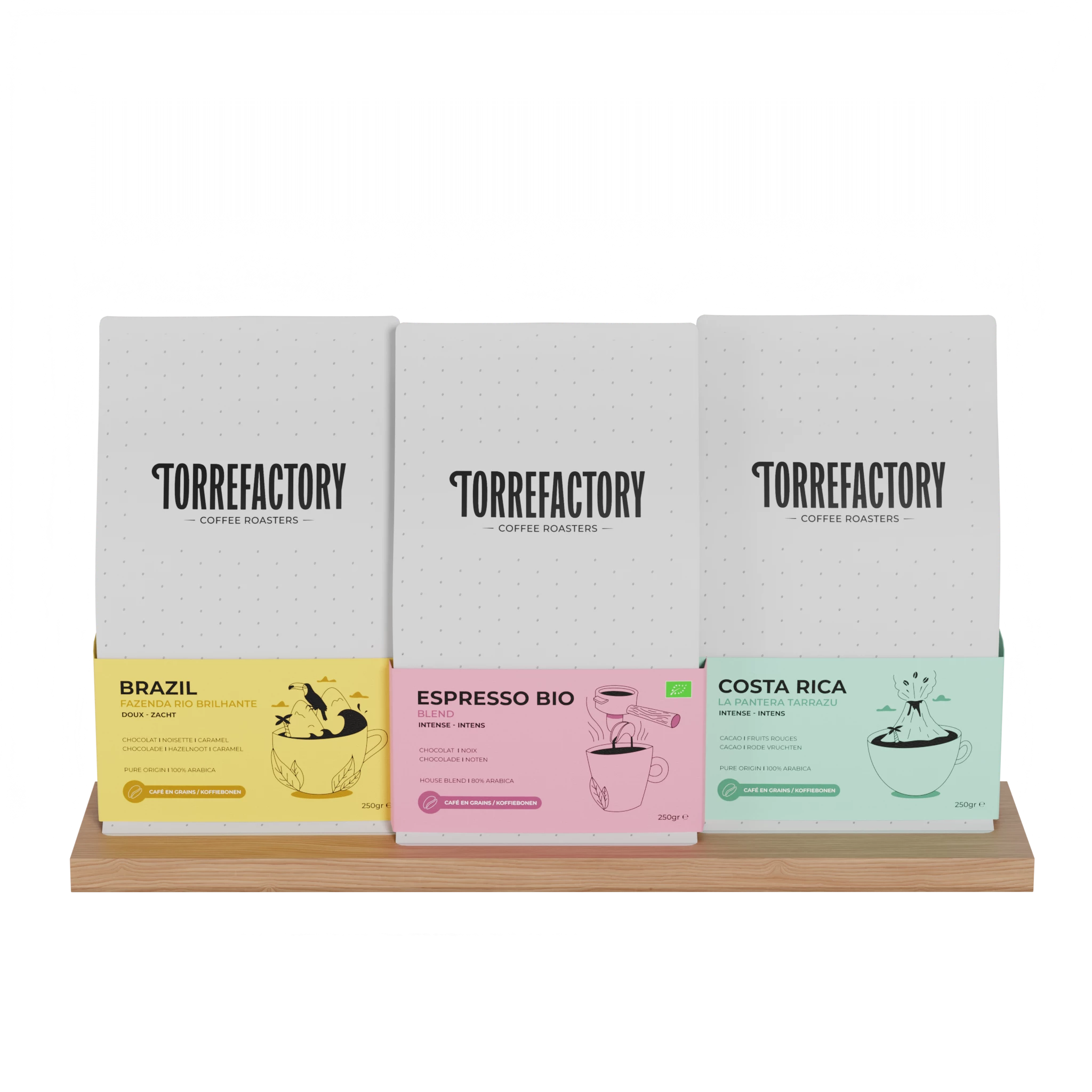 Points of sale.


Organic coffee
Why switching to organic coffee really changes your daily life (and not just your coffee)
More and more consumers are turning to healthy, sustainable and transparent products. And coffee is no exception to this trend. If you're wondering about the benefits of organic coffee beans, here's what you need to know before changing your habits, cup after cup.

Organic coffee: what does it mean?
organic coffee is grown without synthetic pesticides, chemical fertilizers or GMOs. It respects the soil, preserves biodiversity and follows sustainable farming practices. These methods are governed by strict specifications and verified by independent certification bodies. By choosing an organic coffee, you are supporting a culture that is more respectful of the environment and local ecosystems.
Benefits for your health... and your taste buds
organic coffee is grown without the use of synthetic pesticides or chemical fertilizers, which limits the presence of undesirable residues in the cup. For regular consumers, this is a criterion that can weigh in the balance.
But beyond this aspect, organic is also distinguished by the purity of the grain: less altered by chemical inputs, it often better expresses its natural aromatic profile. The result? A coffee that's clearer, more balanced and often more pleasant to drink.
Organic vs. conventional coffee: a real difference
It's true that organic coffee can be a little more expensive. But it guarantees a crop free of synthetic chemicals, which is more respectful of the environment. And when carefully selected and roasted, it also offers a purer taste and better-preserved aromas.
Of course, not all organic coffees are created equal: quality also depends on the roaster's sourcing and know-how. But by choosing a good organic coffee, you're making an informed choice that's healthier for you and gentler on the planet.
Torrefactory: organic coffee with consistency
At Torrefactory, almost half the range is certified organic. But we go even further: ethical sourcing, artisanal roasting, recyclable packaging and total transparency. We believe that organic coffee should be good in every sense of the word.
Choosing organic coffee that makes sense
Respect for the soil, sustainable farming, and artisanal roasting: explore a range of organic coffees selected for their quality and aromatic balance.
FAQ - Organic coffee, beyond preconceived notions
Is organic coffee really better for your health?
Organic coffee is not a medical product and does not guarantee measurable health benefits. However, it is produced using agricultural practices that do not involve pesticides or synthetic fertilizers, which limits exposure to chemical residues in the production chain. For regular consumers, it is part of a more conscious approach to the quality of raw materials and their traceability. As with taste, the appeal of organic coffee depends mainly on the origin of the beans and the roasting process.
Does organic coffee always taste better than conventional coffee?
No, not systematically. The taste depends above all on the origin, the terroir, the harvest, and the roasting process. However, organic coffee creates conditions conducive to a clearer aromatic expression, as the soil is not depleted by chemical inputs. When properly processed, organic coffee often offers a more distinct and balanced cup. However, the final quality remains inseparable from the roaster's expertise.
Why is organic coffee often more expensive?
Organic coffee is more expensive because its production involves lower yields, more labor, and regular inspections to maintain certification. Producers must also manage strict separation between organic and non-organic supply chains, which increases logistics costs. The price therefore reflects a more demanding agricultural reality. When it is also fair trade, organic coffee above all ensures more stable and decent remuneration for producers.
Are all organic coffees fair trade?
No. The organic label only applies to cultivation methods, not to the economic conditions of sale. Organic coffee can therefore be purchased at a price that is subject to global market fluctuations. This is why the association between organic coffee and fair trade is essential for overall consistency. At Torrefactory, organic coffee is part of a broader approach that includes traceability, sustainable partnerships, and fairer remuneration for producers.
Is organic coffee suitable for all brewing methods?
Yes, organic coffee is suitable for all preparation methods, provided that the settings are correct. In bean form, it is equally suitable for espresso and for gentle methods such as filter, French press, or Aeropress. Its aromatic purity is particularly enhanced by slow extraction, which reveals the finesse and complexity of the bean. The quality of the grind and the water remains crucial for a balanced result.
How to choose the right organic coffee when you're just starting out?
To start with, it is recommended to choose a balanced organic coffee that is not too acidic and has been carefully roasted. Coffees from Central or South America often offer well-rounded and accessible profiles. Beyond the label, choose a roaster that is transparent about the origin, freshness, and processing of the beans. The overall consistency of the approach is more reliable than a single certification.
Find out more about our products and services:
coffee beans - roasted coffee - specialty coffee - fair trade coffee - roaster coffee - subscription for coffee beans - buying coffee beans - coffee tasting box - coffee bean machine - automatic coffee machines - organic coffee beans - best coffee beans